The pot that must
not be stirred.
Potjiekos — "small-pot food" — is the braai's patient cousin: a three-legged cast-iron pot, a handful of coals, a strict law of layers, and hours of doing gloriously little.
Potjiekos — "small-pot food" — is the braai's patient cousin: a three-legged cast-iron pot, a handful of coals, a strict law of layers, and hours of doing gloriously little.
Potjiekos is a slow-cooked stew-that-is-not-a-stew, made in a round-bellied, three-legged cast-iron pot (the potjie) over a small bed of coals. Meat is browned in the bottom, vegetables are layered on top in strict order, a modest amount of liquid goes in, the lid goes on — and then, for the next three hours, the only acceptable intervention is adding the occasional coal and defending the pot from people holding spoons. The flavours layer instead of blending, which is the whole point, and the difference between a potjie and a stew is the difference between a choir and a shout.
Potjies are numbered, not measured — a tradition nobody questions. A no. 2 feeds four comfortably, a no. 3 (the people's choice) feeds six to eight, and anything bigger is for weddings and rugby finals. New pots need seasoning: scrub out the factory coating, rub with oil, and bake it black over a fire once or twice. A well-loved potjie is never scrubbed with soap again — wipe it, oil it, and let the years do the seasoning. Inheriting one is better than inheriting money.
Everything about a potjie follows from one principle: what needs longest cooks lowest. Brown the meat first in the bottom of the pot, in the fat, in batches. Soften your onions in the same fat — they carry the flavour up. Then layer: hard vegetables (carrots, potatoes) before soft ones (mushrooms, beans), starch where the recipe wants it, and just enough liquid to steam the tower without drowning it — a potjie is not a soup, and the lid returns most of what rises. Then the lid goes on and the law takes over.
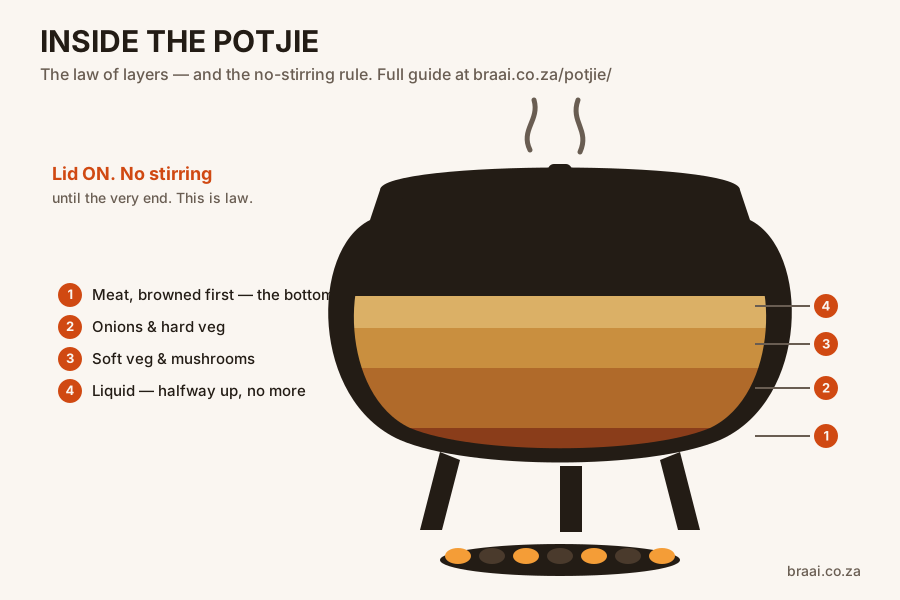
You do not stir a potjie. Not to check, not to help, not because you were nervous. Stirring collapses the layers, turns dinner into ordinary stew, and — more seriously — announces to everyone present that you panicked. The one sanctioned exception: a gentle fold in the final minutes when a recipe finishes with cream or seasoning. Otherwise the lid stays on, the steam does the work, and you occupy your hands with a dop and your reputation with patience.
A potjie wants far fewer coals than a braai — a small steady bed underneath and a few fresh ones added every half hour from a feeder fire burning alongside. The pot should murmur, never gallop: a lazy simmer you can hear when you put your ear near the lid (an accepted potjie ritual). Too hot and the bottom catches while the top steams; if you smell catching, take coals away — you can always add, you can never un-burn. Wood, timing and the hand test all live in the Wood & Coals guide.
The creamy crowd-pleaser — a favourite on this site since the 2009 blog days, rebuilt properly. Bacon starts it, cream finishes it, and everything in between obeys the law of layers.
Read left to right: ingredients merge into layers, layers merge into supper.
| Ingredient | Process → | ||
|---|---|---|---|
| Bacon 250 g | Render in the potjie | Layer up: onions → mushrooms → carrots → potatoes; stock over; lid on · gentle coals · 1½–2 h · NO stirring | Fold in cream & thyme, last 15 min → season → serve with rice or pap |
| Chicken 1.5 kg | Brown in the bacon fat | ||
| Onions 2, sliced | Soften in the pot | ||
| Garlic 2 cloves | |||
| Mushrooms 500 g | → | ||
| Carrots 3 | |||
| Baby potatoes 500 g | |||
| Chicken stock 250 ml | |||
| Cream 250 ml | Wait patiently by the fire | ||
| Thyme & seasoning | |||
Another 2009 original reborn. Pork neck — the most underrated cut on the block — in a mild curry warmed with apricot, the great South African pairing.
Read left to right: ingredients merge into layers, layers merge into supper.
| Ingredient | Process → | ||
|---|---|---|---|
| Pork neck 1.5 kg | Brown in oil, in batches | Layer carrots → potatoes; pour tomato-jam-stock over; bay in; lid on · gentle coals · 2–2½ h · NO stirring | Season → serve over pap or rice |
| Onions 2 | Fry until fragrant | ||
| Curry, turmeric 2 tbsp / 1 tsp | |||
| Garlic & ginger | |||
| Carrots 3 | → | ||
| Potatoes 500 g | |||
| Tomatoes 1 tin | Mix → the sauce | ||
| Apricot jam 2 tbsp | |||
| Stock & bay 250 ml | |||
The canon. Shin and chuck — the cuts the grid can't tame — browned hard, layered high, and left alone until the wine, the marrow and the hours have done what no rushing ever could.
Read left to right: ingredients merge into layers, layers merge into supper.
| Ingredient | Process → | |||
|---|---|---|---|---|
| Beef shin & chuck 1.5 kg | Dust in seasoned flour | Brown hard, in batches | Layer carrots → mushrooms → potatoes → beans; lid on · gentle coals · 3–3½ h · NO stirring | Season → serve from the pot, roosterkoek for the gravy |
| Onions & garlic | Soften in the same pot | |||
| Red wine 250 ml | Deglaze, bubble 1 min | |||
| Beef stock 250 ml | Add with the wine | |||
| Rosemary & bay | ||||
| Carrots 4 | → | |||
| Mushrooms 250 g | ||||
| Baby potatoes 500 g | ||||
| Green beans 200 g | ||||
| Seasoning | ||||